
Not a Replacement, but a Division of Roles: Understanding Silicollar and GPS
- Furlegs

- Dec 15, 2024
- 4 min read
Updated: Sep 27

I didn’t set out to compare technologies. I just wanted something that made sense for my dog’s daily life—and something that wouldn’t fail when it mattered most.
In today’s world, smart pet products are everywhere—offering identification, location tracking, activity logging, and health monitoring. The features seem endless. Yet, in real life, it’s not the laundry list of functionalities that matters most. It’s the specific role each tool plays in keeping your pet safe.
Silicollar: Everyday Stability You Can Rely On
Silicollar is designed to be a collar your dog can wear every single day. Crafted from soft, skin-friendly materials, it requires no charging, no pairing, and is fully waterproof. Whether your dog is swimming, playing in the rain, or rolling in muddy puddles, Silicollar’s identification function remains intact. There’s no need to remove it or worry about wear and tear. Simply clip on the leash, and you’re good to go.
This isn’t about cutting-edge tech for the sake of innovation—it’s about dependable, everyday stability. The best protection is the kind you and your dog barely notice. No charging reminders, no battery checks, and no risk of your dog being “unprotected” while a device sits on the charger. Those gaps in coverage? They’re often when accidents strike.
GPS: A Specialized Tool for Active Tracking
GPS serves a distinctly different purpose. Its core strength lies in continuous location tracking, leveraging satellites and networks to regularly update your pet’s position. It’s built for owners who want to actively monitor their pet’s whereabouts and initiate real-time searches. Due to this focus, GPS devices are often bulkier, require regular charging, and aren’t always suited for long-term wear. Many aren’t even designed to function as collars—they’re specialized tracking tools.

But GPS isn’t the only way to locate a pet. Technologies like NFC, QR codes, Wi-Fi, and Bluetooth can also provide location data, depending on the situation. The real question isn’t whether a technology can track a location—it’s who is using it, when, and for what purpose.
Silicollar’s Unique Approach to Location Sharing
Silicollar doesn’t rely on GPS, yet it still plays a vital role in helping you reunite with your dog. When a kind stranger taps the collar with their smartphone, your contact information instantly appears on their screen. If they opt to share their location, you’ll receive a notification complete with a map and timestamp.
No app download, no pairing, and no need for you to be nearby.
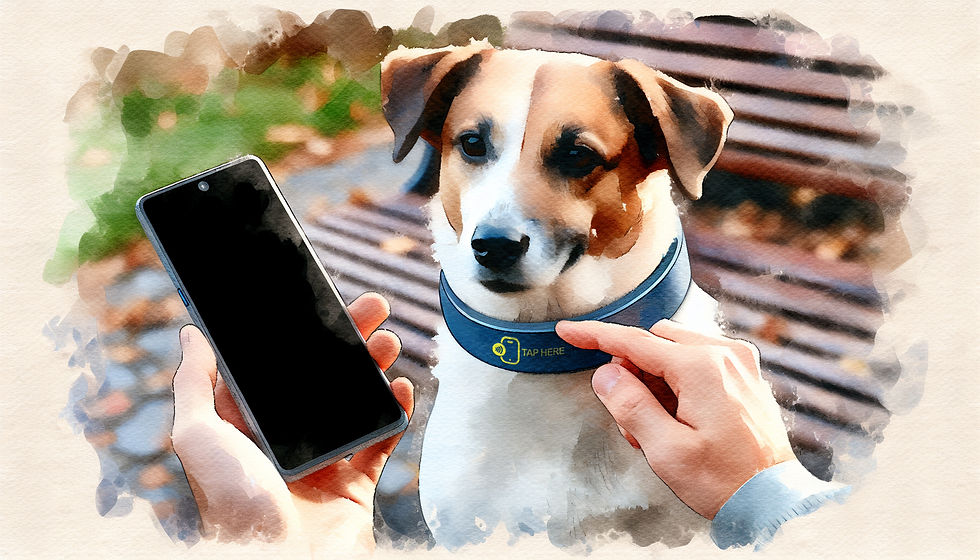
This is event-triggered location sharing—not constant tracking, but a meaningful connection at the exact moment your dog is found. According to ASPCA statistics, most lost pets are discovered by neighbors just a few blocks from home. They’re not hidden deep in the wilderness—they’re simply disoriented. Silicollar is purpose-built for this common, high-probability scenario.
User experience is at the heart of Silicollar’s design. Our app supports 21 languages and automatically adapts to the user’s phone language settings. This ensures strangers won’t struggle with language barriers, while owners can enter their information in their native tongue. The content you input remains unchanged; only the interface adjusts for clarity.
A Division of Roles, Not a Competition
This isn’t about comparing technologies—it’s about understanding their distinct roles.
GPS is a search tool, ideal for wide-area tracking when your pet ventures into unfamiliar territory. It addresses an owner’s “search anxiety”: If my dog goes missing, can I find them?
Silicollar is an identification tool, perfect for daily wear, providing a reliable link to your contact information. It closes the “information gap”: If someone finds my dog, can they reach me right away?
These tools operate in entirely different ways. GPS is initiated by the owner as a proactive search action. Silicollar is activated by a stranger as a reactive contact action. They come into play at different stages of a lost-pet event and are used by different people. They complement each other—they’re not substitutes.
Designing Your Pet’s Safety Strategy
True understanding goes beyond recognizing that GPS devices have battery limitations. It comes from asking deeper questions: Where does my dog usually roam? Are they likely to wander into remote areas? Do I need constant tracking, or do I need a simple way for a neighbor to contact me if they spot my dog nearby?
When you start asking these questions, you’re no longer just a consumer swayed by marketing buzzwords. You’re becoming the architect of your pet’s safety plan. That’s the role Silicollar aims to play—not to persuade you, but to think alongside you.
A Personal Perspective on Choosing Tools
I’m not here to challenge or oppose any technology. I’m simply a dog owner sharing a thoughtful choice. For daily life, the tool that’s truly wearable, waterproof, and never needs charging is Silicollar. As for GPS? I keep it on hand for rare, extreme situations. It has its purpose—and its limitations: battery life, signal strength, and subscriptions. For me, this isn’t about comparison. It’s about a division of roles. It’s about selecting the right tool for the right moment. One walks with us every day. The other waits quietly for the exception. Both are stable. Both are essential.


Comments